
Benefits of Workflow Automation for Growing Businesses
Benefits of Workflow Automation for Growing Businesses
At first, managing a growing business can feel surprisingly simple.
A few emails here. A spreadsheet there. Someone sends an invoice, someone else updates the customer record, and a manager follows up on pending tasks manually.
Then the business grows.
Suddenly, there are more customers, more employees, more approvals, more deadlines, and far more opportunities for something to slip through the cracks.
One person forgets to send a follow-up.
Another updates the wrong spreadsheet.
A task sits untouched because everyone assumes someone else is handling it.
This is exactly where workflow automation starts to make a real difference.
Instead of relying on people to manually push every task from one step to the next, automation helps businesses create repeatable systems that keep work moving automatically.
And for a growing company, that can mean less chaos and a lot more control.
What Is Workflow Automation?
Workflow automation is the use of technology to automatically complete or trigger routine steps within a business process.

For example, imagine a new customer fills out a form on your website.
Without automation, someone may need to:
● Check the form manually
● Enter the information into a CRM
● Notify the sales team
● Send a welcome email
● Schedule a follow-up task
With automation, many of these steps can happen instantly once the form is submitted.
That does not mean removing people from the process.
It means removing unnecessary repetitive work so people can focus on decisions, communication, and tasks that actually require human judgment.
Workflow Automation vs Business Process Automation
The terms are often used together, but there is a slight difference.
Workflow automation usually focuses on automating specific sequences of tasks.
Business process automation, on the other hand, can cover larger end-to-end operations involving multiple teams, systems, and departments.
For example, automating an invoice approval workflow is workflow automation.
Automating the entire process from customer order to invoicing, payment, inventory updates, and reporting would be closer to business process automation.
Both ultimately have the same goal:
Make work move faster with fewer unnecessary manual steps.
7 Major Benefits of Workflow Automation for Growing Businesses
1. It Saves Employees From Repetitive Work
Growth usually creates more work.
But it does not always create more meaningful work.
Employees may spend hours copying information between tools, sending routine reminders, updating records, or checking whether approvals have been completed.
These tasks are necessary, but they rarely require much creativity.
Automation can take care of many of them in the background.
For example:
➔ Automatically assigning new leads
➔ Sending payment reminders
➔ Creating tasks when a project reaches a certain stage
➔ Updating customer records
➔ Sending confirmation emails
The result?
Employees spend less time clicking buttons and more time doing work that contributes directly to the business.
2. It Reduces Human Error
Everyone makes mistakes.
The problem is that small mistakes can become expensive when a business is processing hundreds or thousands of transactions.
Someone might enter the wrong amount.
Forget to attach a document.
Send information to the wrong department.
Or simply overlook an important step.
Well-designed workflow management systems help reduce these inconsistencies by making processes follow the same predefined sequence every time.
If a particular approval must happen before the next step begins, automation can enforce that rule.
That creates more consistency without requiring someone to manually supervise every task.
3. It Speeds Up Everyday Processes
Think about how much time gets lost waiting.
Waiting for approval.
Waiting for someone to forward an email.
Waiting for a document to be reviewed.
Waiting for one department to notify another.
These delays may seem small individually, but together they can slow down the entire business.
With workflow automation, the next step can be triggered as soon as the previous one is completed.
For example, once a manager approves an expense request, the finance team can automatically receive the notification.
No extra email required.
No chasing people down.
No guessing whether someone saw the message.
4. It Makes Scaling Easier
A manual system may work perfectly when a company has ten customers.
It may become a nightmare when it has a thousand.
This is one of the biggest reasons automation matters for growing businesses.
Without automation, more customers often mean more administrative work, more employees, and more complexity.
With effective business process automation, businesses can handle larger volumes without increasing manual work at exactly the same rate.
That makes growth much easier to manage.
Instead of rebuilding operations every time the company expands, you already have repeatable systems in place.
5. It Improves Visibility Across Teams
Ever asked:
"Who is handling this?"
"Has the client approved it yet?"
"Why is this task still pending?"
Poor visibility is a common problem in fast-growing businesses.
Good workflow management gives teams a clearer picture of what is happening across a process.
Managers can often see:
● Which tasks are complete
● Which ones are delayed
● Who is responsible
● Where bottlenecks occur
● How long each stage takes
Instead of searching through endless email threads or messaging five different people, teams can see the status directly.
That makes accountability much clearer.
6. It Creates a Better Customer Experience
Customers may never see your internal systems.
But they definitely feel the difference when those systems work well.
Fast responses.
Consistent communication.
Accurate information.
Fewer missed appointments.
Quicker order processing.
These are all outcomes that automation can support.
For example, a customer submitting a support request can immediately receive confirmation while the ticket is automatically assigned to the right team member.
That small automated step reassures the customer that their request has been received.
And when hundreds of customers interact with your business, small improvements like that add up quickly.
7. It Helps Businesses Make Better Decisions
Automation is not only about completing tasks.
It can also generate useful data about how work actually happens.
A workflow system may reveal that one approval stage consistently takes three days longer than everything else.
Or that certain customer requests repeatedly require manual correction.
That information can help managers identify inefficient processes and improve them.
Instead of relying on assumptions, businesses can make decisions based on actual workflow performance.
And that is one of the most valuable benefits of structured workflow management.
Which Business Processes Can Be Automated?
You do not need to automate everything at once.
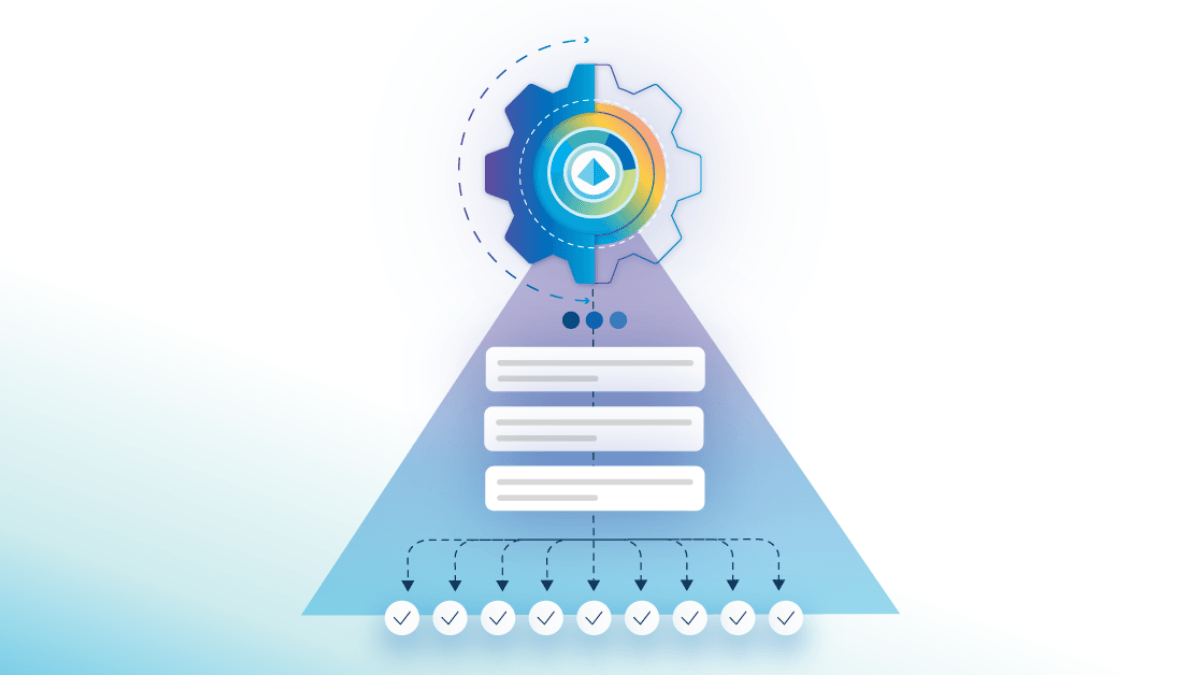
In fact, starting small is often smarter.
Some common areas where businesses use automation include:
● Lead management
● Customer onboarding
● Employee onboarding
● Invoice approvals
● Expense requests
● Appointment scheduling
● Marketing emails
● Customer support tickets
● Inventory notifications
● Contract approvals
● Reporting
● Task assignment
A good starting point is to look for repetitive processes that happen frequently and follow predictable rules.
If employees keep saying, “We do this exact same thing every week,” there may be an opportunity to automate it.
Does Automation Mean Replacing Employees?
Not necessarily.
In most growing businesses, automation is more useful for eliminating low-value tasks than eliminating people.
Think about an employee who spends two hours every day manually updating records.
Automation does not make that employee unnecessary.
It gives those two hours back.
They can now spend that time speaking with customers, analyzing results, solving problems, or supporting growth.
The strongest automation strategies usually combine technology with human expertise rather than trying to replace one with the other.
Start With the Process, Not the Software
There is one common mistake businesses make when exploring workflow automation.
They buy software first.
Then they try to figure out what to automate.
A better approach is the opposite.
Start by asking:
Where are employees losing the most time?
Which tasks are repeatedly delayed?
Where do errors occur most often?
Which processes involve unnecessary manual approvals or data entry?
Once you understand those bottlenecks, you can decide where automation will provide the most value.
Because automation is not about adding more technology just for the sake of it.
It is about removing friction.
And as a business grows, removing that friction can make the difference between a company that feels constantly overwhelmed and one that scales with much greater control.
The best workflow is not the one with the most steps. It is the one that keeps moving without someone constantly pushing it forward.
Recent Posts

Aroopa Apps is an AI-powered low-code/no-code platform for building custom business apps, automating workflows, and streamlining business processes faster and smarter.
New Jersey
Aroopa, Inc
111 Union Valley Rd, Suite 206, Monroe Township, NJ 08831
India
Aroopa Technologies Private Limited
No.2, Padmavathi Nagar,
Agraharam Road, Korattur,
Chennai 600076




Aroopa Apps is now on Android & iOS!


Subscribe to Our Newsletter
Copyright © Aroopa Apps 2026